The APEC Science Prize for
Innovation, Research and Education
Overview
The APEC Science Prize for Innovation, Research and Education (“ASPIRE”) is an annual award which recognizes young scientists who have demonstrated a commitment to both excellence in scientific research, as evidenced by scholarly publication, and cooperation with scientists from other APEC member economies, including inclusive and interdisciplinary collaborations.
The ASPIRE Prize supports APEC’s mission to:
- Strengthen international science and technology networks;
- Enhance economic growth, trade and investment opportunities in harmony with sustainable development, through policies, innovative R&D and technologies, and knowledge sharing; and
- Improve linkages and efficiency between research and innovation.
ASPIRE 2026 Nomination Theme: Advancing Scientific Research in AI and Data Science to Promote Industrial Innovation and Economic Resilience
For 2026, PPSTI presents the ASPIRE Prize theme: “Advancing Scientific Research in AI and Data Science to Promote Industrial Innovation and Economic Resilience.”
As APEC member economies face complex challenges, cutting-edge technologies such as artificial intelligence are playing a pivotal role in driving regional progress and evolution in the Asia-Pacific region. The theme of APEC Science Prize for Innovation, Research and Education (ASPIRE) 2026, "Advancing Scientific Research in AI and Data Science to Promote Industrial Innovation and Economic Resilience," focuses on the basic scientific research and digital platforms that support regional prosperity and stability. We invite nominations that delve into the frontiers of AI and other related emerging technologies that provide scalable solutions for civil society, companies, and public institutions, such as AI forecasting systems that improve the prediction of extreme weather, and AI-driven infrastructures for materials and energy.
This theme highlights the role of trusted AI for both basic scientific research, and applied research to promote the development of secure digital platforms for accelerating scientific discovery and industrial innovation, rooted in values such as reciprocity, transparency, and accountability. By building digital platforms in collaborative, secure innovation ecosystems, we aim to accelerate breakthroughs in material science, energy, and biotechnology, while promoting appropriate protections for intellectual property and national security. These platforms act as "force multipliers," enabling young scientists across APEC economies to collaborate on voluntary, mutually agreed terms to provide solutions to grand challenges.
By focusing on these fundamentals, we recognize the important potential of original innovation in supporting economic prosperity and human flourishing. Nominees should demonstrate excellence in scientific research and show commitment to cross-border cooperation among APEC economies. The 2026 ASPIRE Prize will champion those young scientists who have made remarkable achievements in emerging technologies, particularly in AI and interrelated frontier fields that fuel industrial innovation and bolster economic resilience, fostering an open, dynamic, resilient, and peaceful Asia-Pacific community by 2040.
Eligibility
Any citizen of an APEC member economy is eligible to be nominated for the ASPIRE Prize. He or she must be under 40 years old as of 31 December 2026.
Selection Process
Each member economy, through its representative of the APEC Policy Partnership on Science, Technology and Innovation (PPSTI), is invited to nominate one young scientist under the age of 40 to be considered for the 2026 ASPIRE Prize.
Once nominations are received, PPSTI members rank the nominees through a selection ballot to determine the winner. PPSTI members are asked to judge the nominees based on how well they have demonstrated:
- Excellence in scientific research, as evidenced through scholarly publication;
- Commitment to cooperation with scientists from other APEC member economies; and
- Contribution to the theme of “Toward AI-Bio Convergence: AI-based Inclusive Biotechnology Solving Social Challenges.”
ASPIRE Sponsors
The National Center for APEC Foundation, based in the United States, is generously sponsoring the 2026 ASPIRE Prize with an award of $25,000 USD in prize funding.
Previous ASPIRE Winners
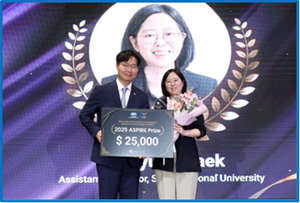 | | 2025: AI-Powered Breakthrough in Protein Design Dr. Minkyung Baek, a computational biologist from the Republic of Korea, was awarded the 2025 ASPIRE Prize at a ceremony held in Incheon, Republic of Korea. Dr. Baek is an Assistant Professor at Seoul National University. Her research is focused on AI-powered protein structure prediction and design, with the goal of accelerating the development of medicines and sustainable materials. She developed an AI tool that enables scientists to predict the three-dimensional shapes of proteins, facilitating faster vaccine development, novel drug discovery, and the design of proteins not found in nature. Her work exemplifies the convergence of artificial intelligence and biotechnology in addressing real-world health and social challenges across the Asia-Pacific region.
2024: PPSTI did not conduct the ASPIRE PRIZE
|
| | | |
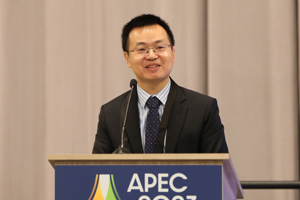 | | 2023: Inclusive Science, Technology, and Innovation for a Resilient and Sustainable Environment Dr. Zheng Liu, a professor at Nanyang Technological University in Singapore, was awarded the 2023 ASPIRE Prize for his groundbreaking work on two-dimensional (2D) materials. His work has been focused on enhancing semiconducting electrocatalysts and photocatalysts for sustainable energy, electronic device development and fabrication, and integrated Al. His research and its applications have the potential to reduce the risk of energy over-consumption. Dr. Liu’s innovations contribute to sustainability while promoting inclusive scientific collaboration across the APEC region. |
| | | |
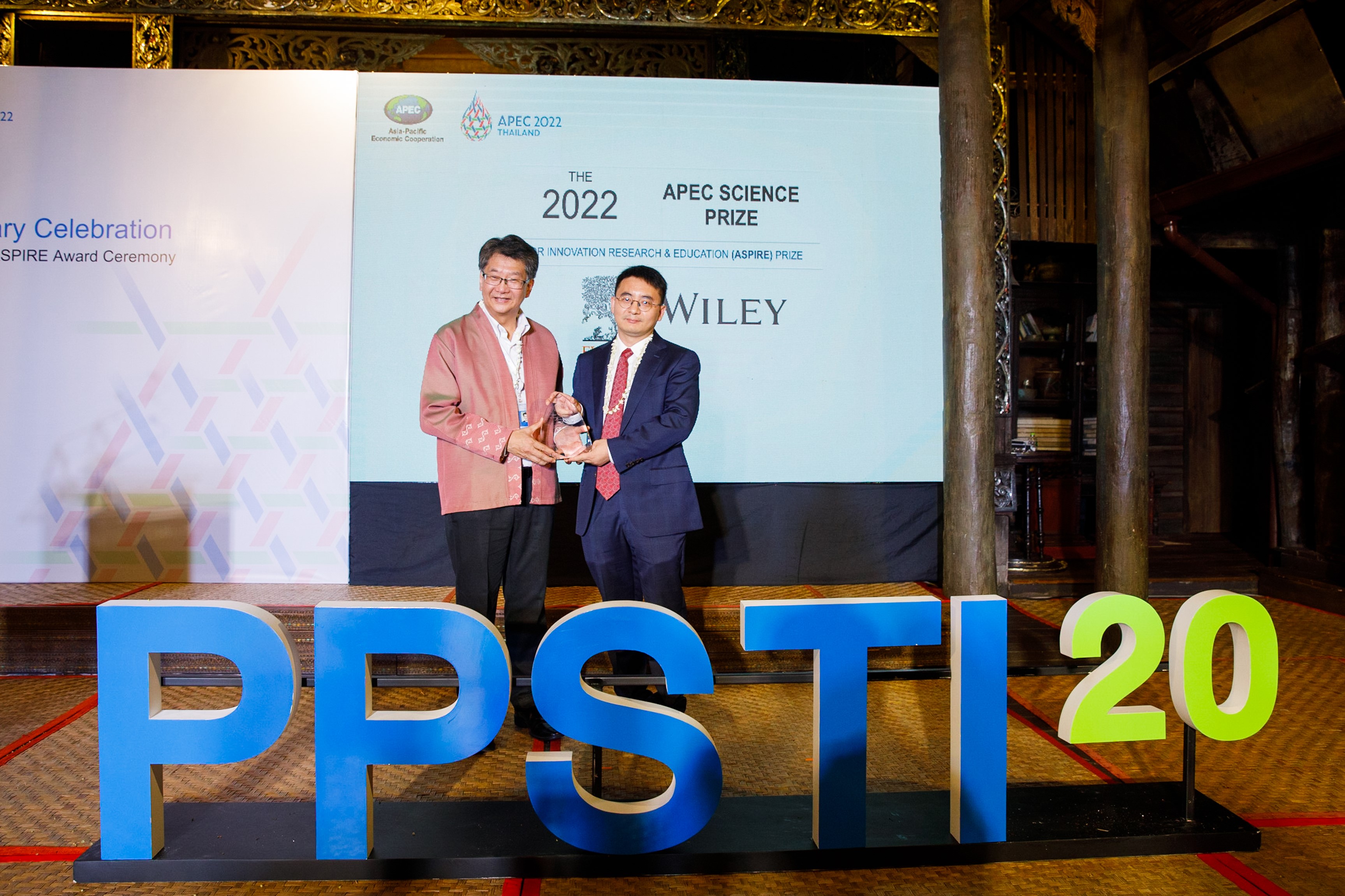 | | 2022: Transformation to a Bio-Circular-Green Economy Dr Jingzheng Ren, an industrial and systems engineer from Hong King, China, was awarded the 2022 ASPIRE Prize at an in-person ceremony in Chiang Mai, Thailand. Dr Ren is an Assistant Professor at the Hong Kong Polytechnic
University. His research is focused on decision-making for economic, industrial, and social systems. He has developed new methods to promote harmonious development of the economy, environment, and society. He has collaborated with
scientists in 12 APEC economies and has been published in over 183 scientific journals. |
| | | |
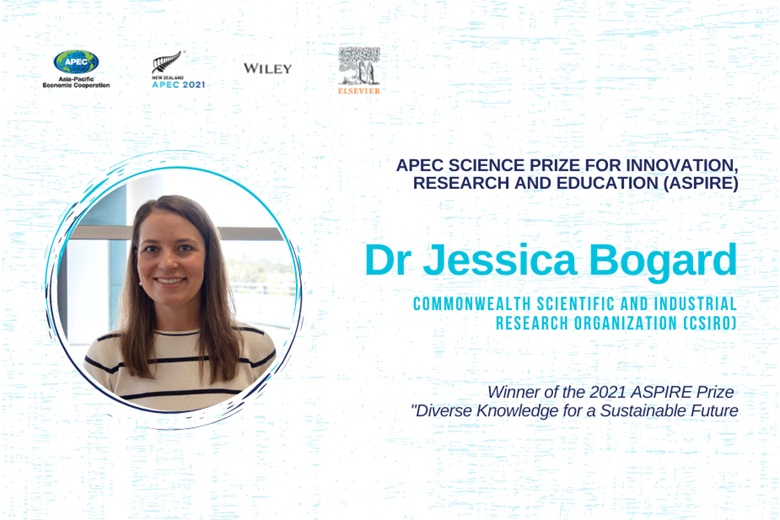
| | 2021: Diverse Knowledge for a Sustainable Future Dr Jessica Bogard, a dietitian and public health nutritionist from Australia, was awarded the 2021 ASPIRE Prize, for her research focusing on boosting the potential of underutilized local and indigenous food to reduce malnutrition, particularly
among pregnant women and young children. Dr. Bogard pioneered the development of a database of nutritional quality of more than 50 species of fish and aquatic food and found that certain indigenous species of fish are rich sources
of a multitude of micronutrients, but their availability is declining. She is a research scientist at the Commonwealth Scientific and Industrial Research Organisation (CSIRO) Australia.
|
| | | |
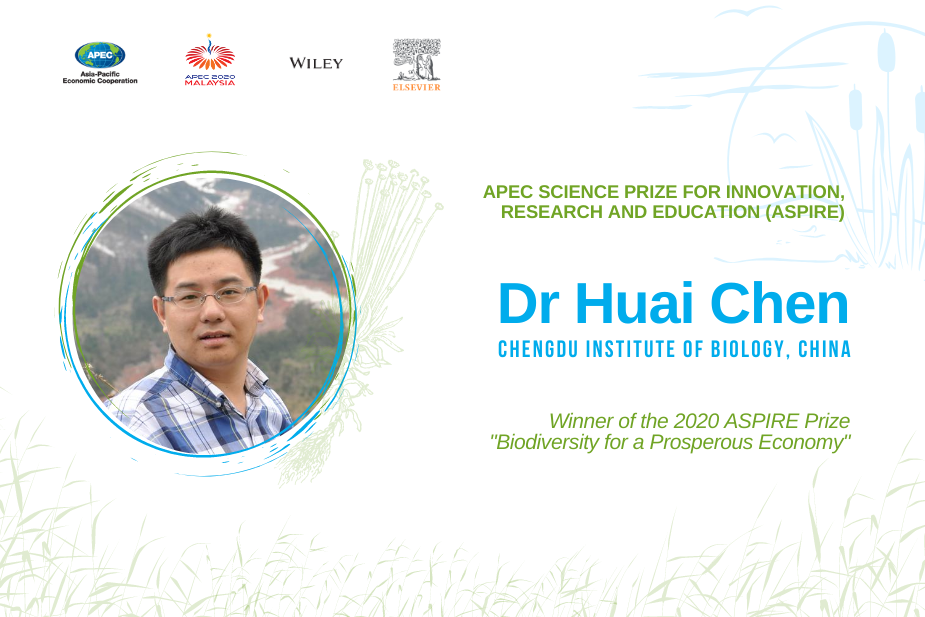
| | 2020: Biodiversity for a Prosperous Economy Dr Huai Chen was awarded the 2020 ASPIRE Prize at an online ceremony by Dr Siti Hamisah Tapsir, Secretary General, Ministry of Science, Technology and Innovation (MOSTI) Malaysia. Dr Chen is a professor at Chengdu Institute of Biology, Chinese Academy of Sciences. His research is focused on wetland biodiversity and nature’s contribution to people. Dr Chen’s findings lead to a better understanding of
these wetlands including protecting, developing new generation models for methane emissions and enhancing assessment of carbon storage and ecological value.
|
| | | |
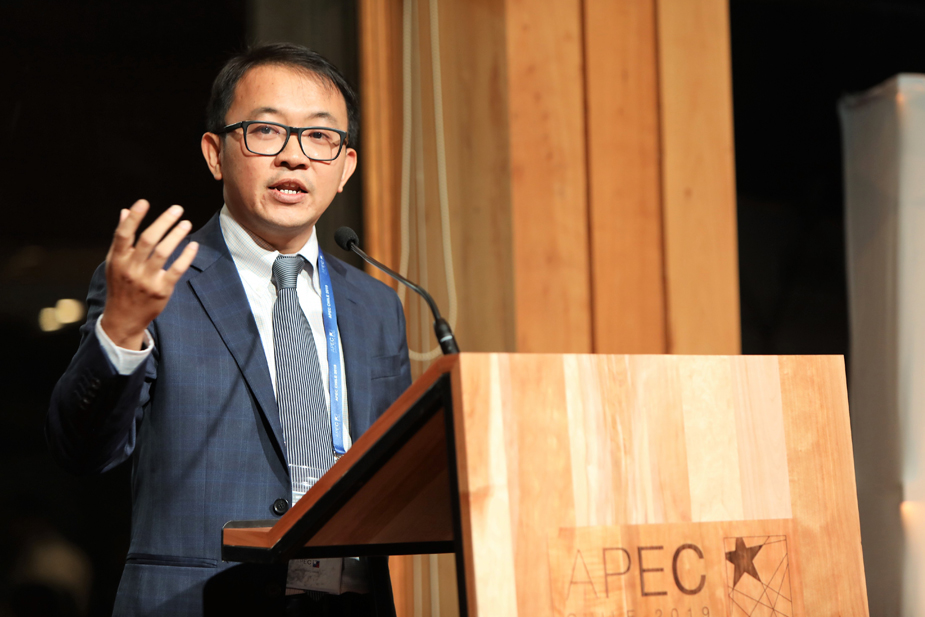
| | 2019: Smart Technolgies for Healthy Societies Dr Yun Hau NG was awarded the 2019 ASPIRE Prize in Puerto Varas, Chile by Dr Nicole Ehrenfeld, Director, Scientific Initiative Millennium, Ministry of Economy, Chile. Dr Ng is an associate professor at the School of Energy and Environment,
City University of Hong Kong, China. His research is focused on the development of highly efficient photocatalytic systems to mimic natural photosynthesis to produce clean hydrogen from water. In short, he uses sunlight to split water
into clean hydrogen.
|
| | | |
| | 2018: Smart Technologies for Healthy Societies Dr Madhu Bhaskaran of Australia was awarded the 2018 ASPIRE Prize in Port Moresby by Hon. Pila Niningi, Minister for Higher Education, Research, Science and Technology of Papau New Guinea. Dr Bhaskaran is a professor at RMIT University,
Melbourne, Australia where her work transforms the way we imagine, use and interact with electronic devices and sensors. She has developed ways to combine functional oxide materials processed at high temperatures with elastic and plastic
materials. Her work has led to the development of wearable elastic electronics and sensors, including gas and UV sensors and flat optical devices—all of which are stretchable, optically transparent and as thin as a nicotine patch.
|
| | | |
| | 2017: New Material Technologies Dr Yanwu Zhu of China was awarded the 2017 ASPIRE Prize in Ha Noi by Deputy Minister of Science and Technology of Viet Nam, Tran Quoc Khanh. Dr Zhu is a Professor at the University of Science and Technology of China where he researches
the fields of nanomaterials and specifically new carbon materials. His publications have been widely cited and his research with other APEC scientists has been applied in large-scale production of graphene materials.
|
| |
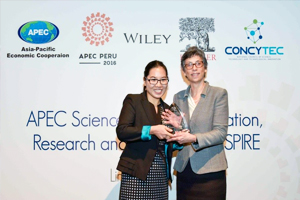
| | 2016: Technologies for Food Security Dr Hua Kuang of China was awarded the 2016 ASPIRE Prize in Lima by Dr Gisella Orjeda, President of the Peruvian National Council for Science, Technology and Technological Innovative (CONCYTEC). Dr Kuang is a Professor at Jiangnan University’s
School of Food Science and Technology in Wuxi, China, where she works with researchers in other APEC economies to develop low-cost biosensors that detect food sanitation hazards. Her patented technologies have been used to improve
food safety for millions in China and elsewhere. |
| |
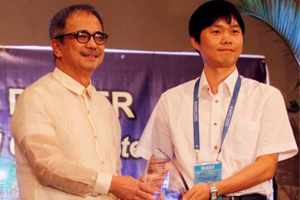
| | 2015: Disaster Risk Reduction: Understanding the Role of Climate Change and Variability Dr Jong-Seong Kug of Korea was awarded the 2015 ASPIRE Prize in Manila by Secretary Mario Montejo of the Philippine Department of Science and Technology. Dr Kug is an Associate Professor at Pohang University of Science and Technology’s
School of Environmental Science and Engineering in Korea, and his El Niño prediction model has helped the Korea Meteorological Administration better understand tropical climate dynamics, and forecast and track extreme weather—an
area that addressed Philippines’ theme of “Disaster Risk Reduction: Understanding the Role of Climate Change and Variability.”
|
| |
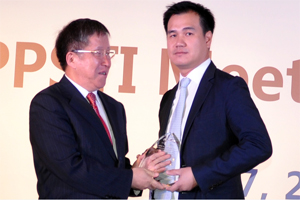 | | 2014: Intelligent Transportation Dr Agachai Sumalee, a Thai professor at the Hong Kong Polytechnic University, was awarded the 2014 ASPIRE Prize by Cai Jianlin, China’s Vice Minister of Science and Technology. China selected the theme of “Intelligent
Transportation”to reflect China’s interest in facilitating green and sustainable growth, environmental protection and low-carbon economies. Dr Sumalee designed a model in collaboration with researchers from across the APEC
region that allows highway managers to predict traffic conditions and prevent congestion. This led to ground breaking road traffic management system that slashed commuting times in the greater Bangkok area.
|
| |
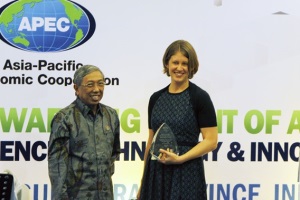 | | 2013: Sustainable Ocean Development In 2013 the ASPIRE Prize was awarded by Gusti M. Hatta, Indonesia’s Minister of Research and Technology, to Dr Carissa Klein of Australia. Dr Klein’s research with the University of Queensland uniquely addressed the 2013 ASPIRE
nominating theme of “sustainable ocean development” by striking a balance between biodiversity conservation and socioeconomic viability. Her work has helped two APEC member economies—Malaysia and the United States—sustainably
zone the ocean for fishing and conservation.
|
| |
 | | 2012: Health Innovation Dr Rossa Wai Kwun Chiu of Hong Kong, China was awarded the 2012 ASPIRE Prize. Russia selected “health innovation” as its ASPIRE nominating theme, building on it desire that APEC actively foster cooperation among economies in
major innovation areas, such as human health, to support healthy lifestyles, productivity and economic growth. Dr Chiu’s groundbreaking research and innovations in chemical pathology has brought non-invasive prenatal diagnosis
of fetal genetic diseases into routine clinical use around the world.
|
| |
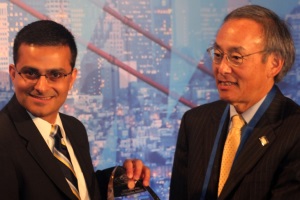 | | 2011: Green Growth In 2011 the ASPIRE Prize was awarded by Nobel Laureate and U.S. Secretary of Energy Steven Chu to Dr Ali Javey of the United States. The United States selected “green growth” as its ASPIRE nominating theme, building on
its desire that APEC actively promote environmentally sustainable economic growth and development, and help our economies successfully transition to a clean energy future. Dr Javey’s innovative work with nanomaterials has
made great strides in developing a new generation of solar energy technology and reducing energy consumption in “green electronics.” |

