


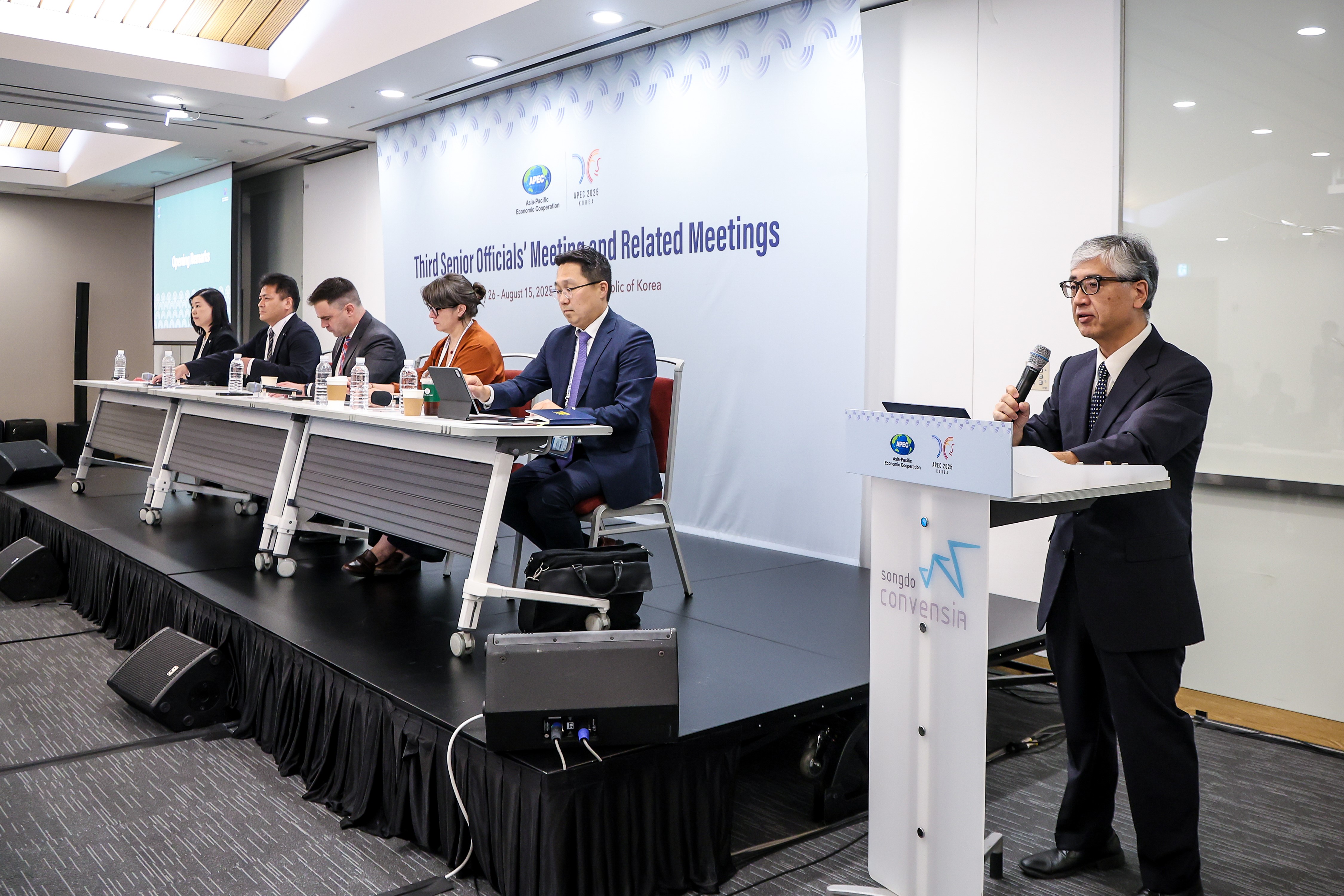
Workshop on Promoting Environmental Policies that Meet the Needs of the Private Sector held on August 8 2025, hosted by MAFF Japan, speakers made presentations on their initiatives, activities, and best practices addressing key environmental challenges in food supply chain and made discussions on environmental policies aligned with private sector needs and potential collaboration among stakeholders.
The objective of the workshop is to promote policies which meet the needs of the private sector and to consider the respective roles of the public and private sectors in working together, strengthening public-private partnerships by sharing and discussing the specific approaches of the private sector to address environmental challenges. This project supports “APEC Food Security Roadmap Towards 2030” to achieve a sustainable food supply chain in the APEC region.
The workshop successfully met its objectives by fostering meaningful dialogue among public and private stakeholders across APEC economies. Participants gained valuable insights into the practical challenges and needs faced by private food companies in implementing environmentally sustainable practices. These discussions highlighted the importance of aligning environmental policies with business realities and emphasized the role of innovation, incentives, and capacity-building in driving sustainability across food supply chains.
Moreover, the workshop facilitated the identification of potential public-private partnership opportunities that can enhance the effectiveness of environmental policies. By promoting mutual learning and cross-border collaboration, the workshop contributed to a shared understanding of policy harmonization and underscored the necessity of strengthening environmentally conscious practices for a regional movement toward more resilient, inclusive, and sustainable food systems in the APEC region.
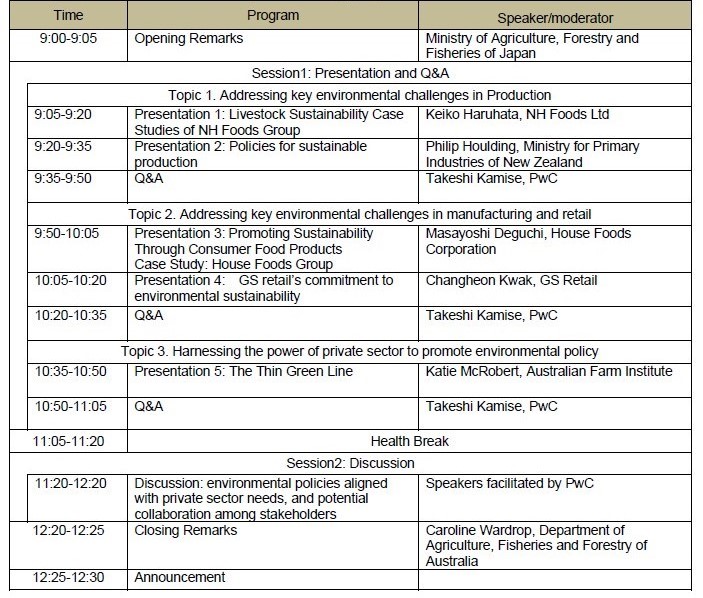
Program Agenda
Presentation Material
Session 1
1. Keiko Haruhata, NH Foods Ltd., Japan - Download Here
2. Philip Houlding, Ministry for Primary Industries of New Zealand, New Zealand- Download Here
3. Masayoshi Deguchi, House Foods Corporation, Japan- Download Here
4. Changheon Kwak, GS Retail, Republic of Korea - Download Here
5. Katie McRobert, Australian Farm Institute, Australia- Download Here
Session 2
1. Discussion Paper - Download Here
Key findings
The following key findings were derived from the presentations, speaker insights, and discussions held during the workshop.
✓ Collaboration is Essential: Achieving sustainability requires coordinated efforts across public and private sectors, regions, and industries. Establishing shared goals or common challenges is critical to enabling effective collaboration and driving progress.
✓ Innovation Drives Environmental Impact Reduction: Technological advancements—such as digital tools in agriculture and energy-efficient systems in retail—play a central role in maintaining productivity while minimizing environmental harm.
✓ Transparency and Education Build Trust: Open communication of data (e.g., emissions, certifications) and consumer education are vital for fostering trust and empowering responsible decision-making.
✓ Solutions Must be Context-Specific: Sustainability challenges vary by region and economy. Effective solutions must be adaptable to local conditions while remaining aligned with global sustainability objectives. A one-size-fits-all approach is not effective.
APEC Project Database "Click here"