


APEC Life-Course Vaccination Dashboard
Tracking Policy, Financing, Regulation, and Delivery Readiness
Life-course immunization helps people stay healthy at every age—protecting children, adolescents, adults, and older adults from vaccine-preventable diseases. As APEC economies manage aging populations, rising health needs, and more frequent public health emergencies, vaccinating across the life course has become an important way to keep communities healthy, reduce pressure on health systems, and support a productive workforce. To deliver these benefits, economies need more than vaccines alone. They also require the right policies, financing structures, delivery platforms, data systems, and regulatory processes to make life-course vaccination accessible and sustainable. This dashboard brings these elements together across seven pillars of system readiness, making it easier to see where enabling mechanisms are already in place and where further progress can be made.

2023-2024 APEC Regional Dashboard on Vaccination Across the Life-Course
In November 2022, the APEC Health Working Group's Vaccines Task Force published the APEC Regional Dashboard on Vaccination Across the Life-Course, which provides a snapshot of APEC’s progress towards sustainable life-course immunization programs. Under a life-course approach, vaccination strategies are designed to maximize individuals’ ability to protect themselves from infection and maintain good health over the course of their lives and circumstances.
The Dashboard is based on the goals, policy targets, and key indicators set forth in the APEC Action Plan on Vaccination Across the Life-Course 2021-2030. The measures that APEC economies introduce now to foster strong life-course immunization programs will help the region face the ongoing COVID-19 pandemic, in addition to improving health systems and pandemic preparedness in the longer-term (Figure 1). With the release of the Dashboard, economies will be better able to improve vaccine uptake among their populations and contribute to sustainable regional health.
The results of the APEC Regional Dashboard on Vaccination Across the Life-Course demonstrate success in meeting several measures related to the Action Plan. Consistent with global trends, immunization programs in APEC economies are strongest for pediatric populations, with all economies including recommendations for children in immunization schedules. However, only 67% of APEC economies also include recommendations for adolescents, adults, AND older adults; and only 43% include recommendations for all ages, in addition to healthcare workers and other at-risk populations (e.g., immunocompromised persons, pregnant women, travelers, university students). Strategies and infrastructure for pediatric populations, such as data collection and integration with routine health services, can inform expansion of adolescent and adult immunization programs. These programs also require innovative solutions to encourage vaccine uptake in target populations, for example, expansion of vaccination scope-of-practice for non-traditional providers (e.g., pharmacists, dentists) to ensure populations have multiple accessible vaccination access points.
Additional measures related to progress towards the Action Plan can be found in the Dashboard.
Moving forward, APEC economies can use the goals in the APEC Action Plan on Vaccination Across the Life-Course and findings from the APEC Regional Dashboard on Vaccination Across the Life-Course to inform changes to life-course immunization programs. APEC economies can also support progress towards the pillars through use of other APEC resources, such as the APEC Healthcare Financing Roadmap and the Regulatory Harmonization Steering Committee Vision 2030 and Strategic Framework.
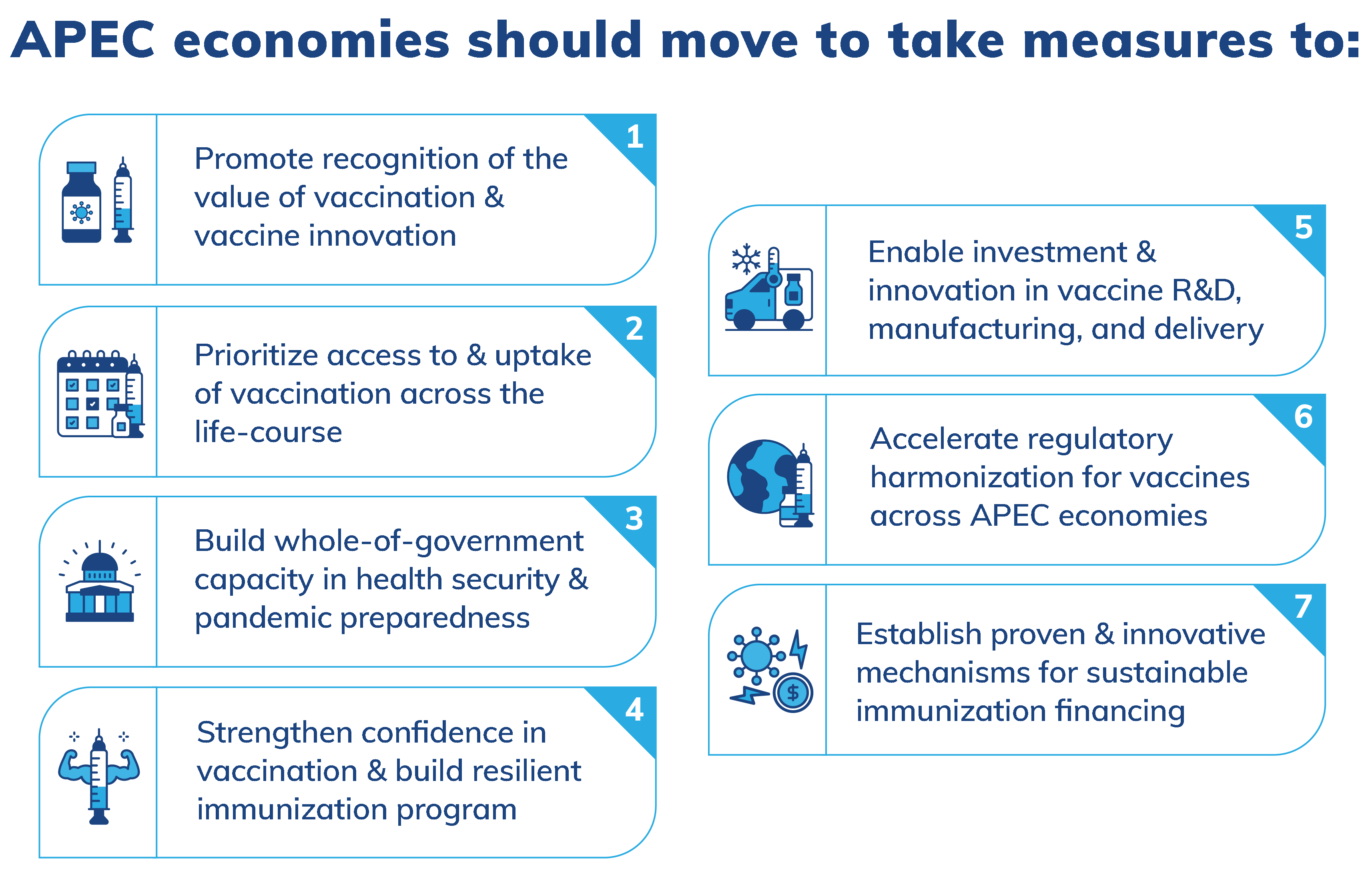
Figure 1: Pillars of the APEC Action Plan on Vaccination Across the Life-Course
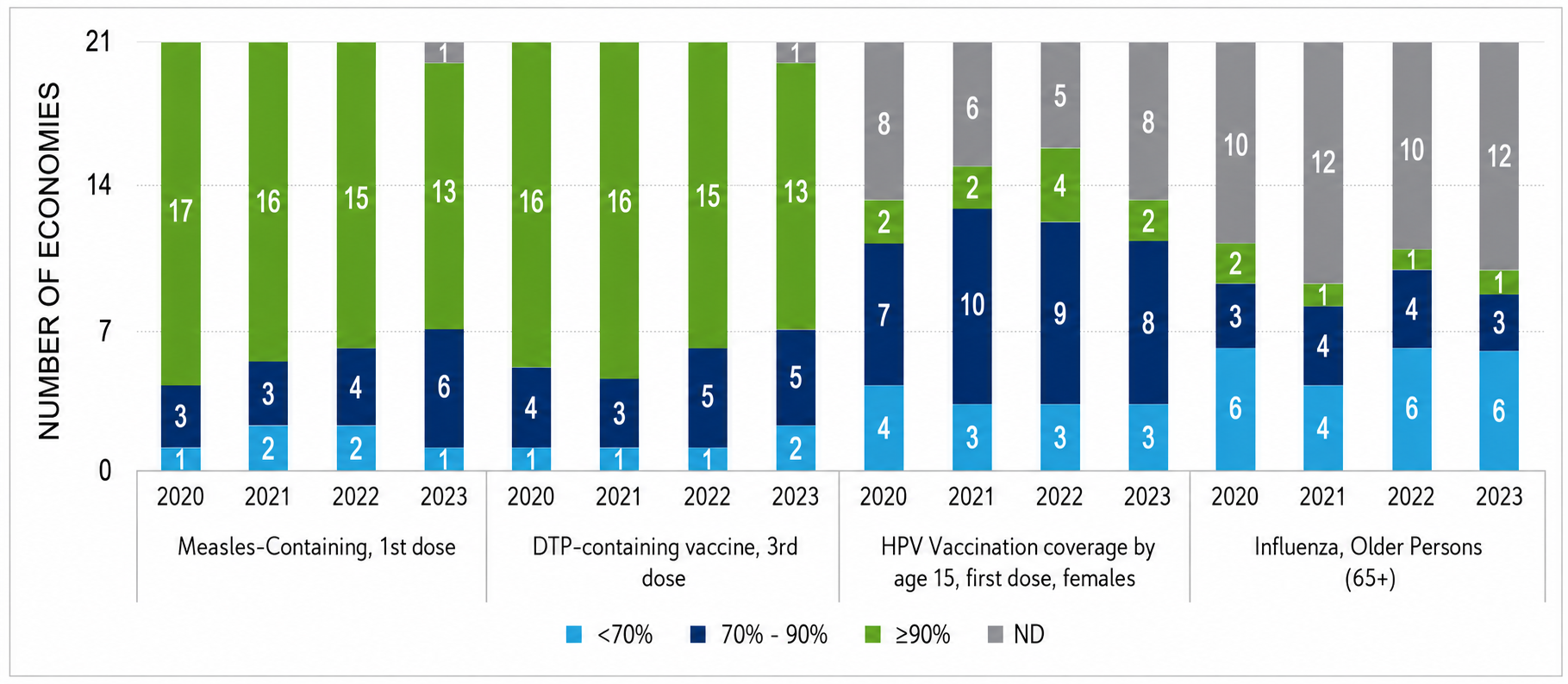
Measure 2.2: Distribution of life-course vaccination rates across APEC economies, 2020-2023*