

Ministers Push for Greater Energy Security as Power Demand Rises
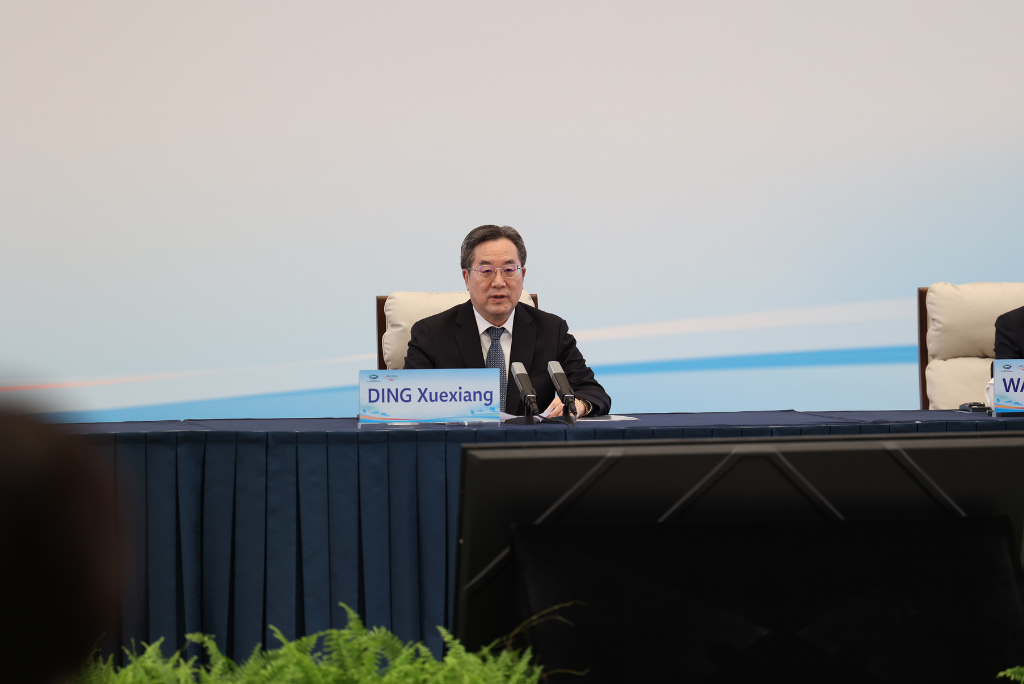
APEC energy ministers are pushing to strengthen energy security across the Asia-Pacific as rising electricity demand puts greater pressure on power systems, costs and supply chain.
Electricity consumption across APEC could nearly double by 2060, driven by growing electrification, data centres and changing transport needs. Meeting in Beijing for the 16th APEC Energy Ministerial Meeting, ministers focused on how the region can meet that demand while strengthening energy systems, widening access and limiting cost pressures on households and businesses.
"The Asia-Pacific accounts for roughly 60 percent of global energy production and consumption. Strengthening energy cooperation is directly relevant not only to each economy's own development but also carries significant weight for the global energy landscape." said Ding Xuexiang, Vice Premier of China, in his opening remarks.
Artificial intelligence (AI) is adding another dimension to the challenge. In 2025, electricity demand for AI training data centers grew 17 percent, outpacing the three percent growth in global electricity demand.
At the same time, AI can help energy systems forecast demand, manage grids and distribute power more efficiently. Ministers highlighted the need for more energy-efficient technologies and talent that can work across the energy and digital sectors, backed by strong cybersecurity and data protection.
But meeting new demand is only part of the challenge. Ministers also focused on extending reliable electricity to communities that remain underserved, including through off-grid and mini-grid systems that can bring power to remote areas without relying on extensions of the main grid.
“Energy is a critical foundation for economic and social development. We must jointly improve energy accessibility, delivering high-quality energy services and practical measures to help remote areas and vulnerable groups improve their energy situation,” Vice Premier Ding urged.
Affordability was another focus, with ministers calling for easier access to financing that can help households cover the upfront cost of energy-efficient appliances and systems.
Economies also discussed how to meet technology-driven energy demand without adding costs for local communities, emphasizing consumer protection and more transparent rules for how electricity is priced and traded.
Supply chain disruptions are also compounding affordability pressures, driving up prices and straining energy systems region-wide. Ministers deliberated ways to diversify energy sources and trade routes, strengthen critical energy infrastructures such as submarine and power cables and enhance emergency reserve management across the region.
As the region's energy landscape shifts, resilience, access and affordability are converging into a single priority. The meeting's discussions built on progress towards APEC's goal of doubling the region's share of renewable energy by 2030 and cutting energy intensity 45 percent by 2035.
The meeting returned to Beijing twelve years after APEC energy ministers met in the city in 2014, when they set the region’s 2030 renewable energy goal.
“Twelve years later, the global energy landscape is undergoing complex and profound transformations. Patterns of energy production and consumption are being reshaped at an accelerated pace, presenting a new set of opportunities and challenges for energy development in the Asia-Pacific,” said Wang Hongzhi, Chair of the ministerial meeting and Administrator of China’s National Energy Administration.
For further details and media inquiries, please contact:
media@apec.org